 Image 1 of 1
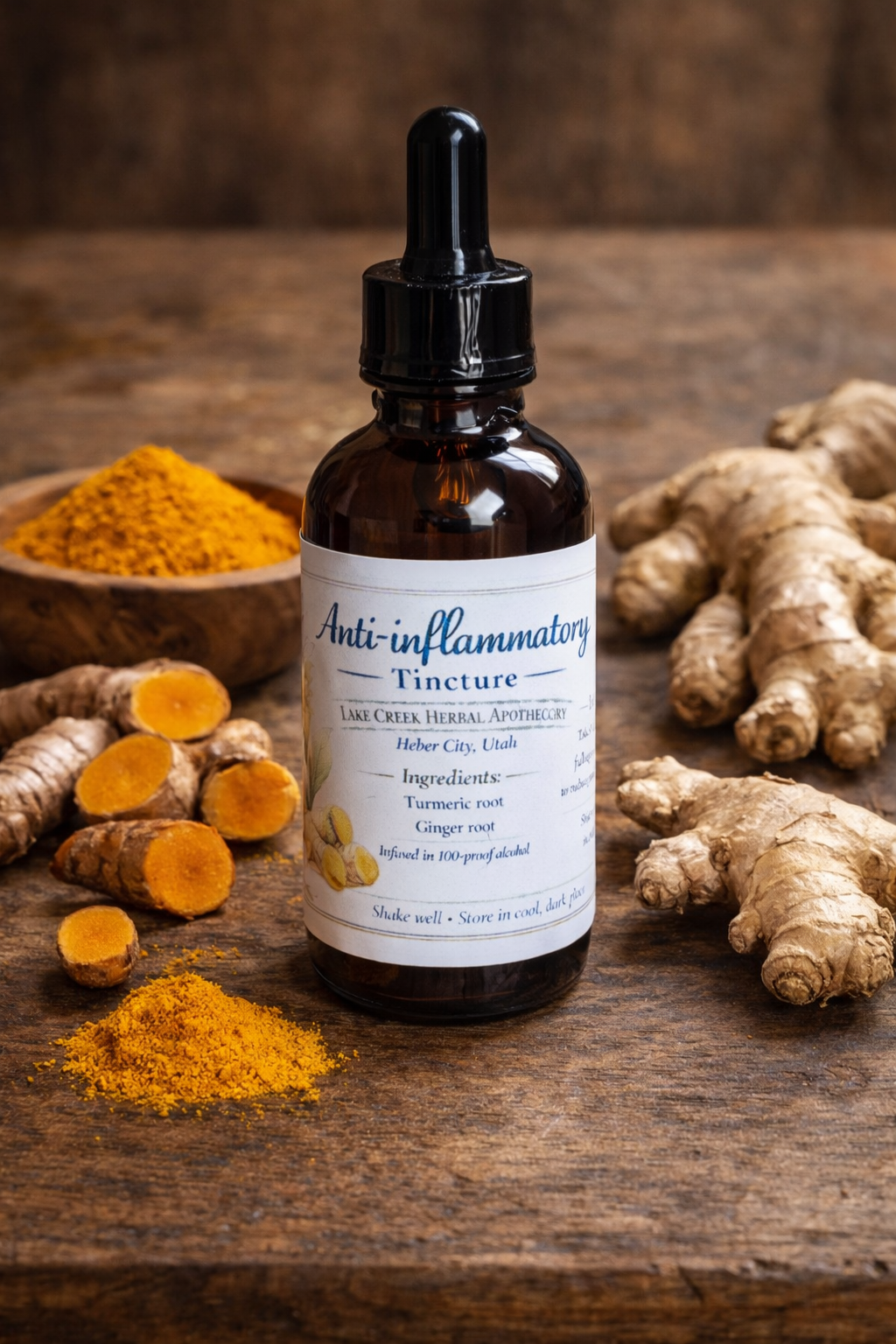
Anti-inflammatory Tincture — Turmeric Root and Ginger Root
Benefits
Turmeric Root (Curcuma longa)
Active constituents: curcumin and related curcuminoids, volatile oils.
Mechanisms: curcumin modulates inflammatory signaling pathways (NF-κB, COX-2, and cytokine production), scavenges free radicals, and supports antioxidant defenses. It can reduce markers of systemic inflammation such as C-reactive protein (CRP).
Clinical uses: commonly used for osteoarthritis and joint pain, exercise-induced inflammation, and to support general inflammatory balance. May also support digestive comfort and liver detoxification pathways.
Pharmacokinetics: curcumin has low oral bioavailability; formulations (combining with black pepper/ piperine or using lipid-based extracts) can increase absorption.
Ginger Root (Zingiber officinale)
Active constituents: gingerols, shogaols, paradols, and essential oils.
Mechanisms: inhibits prostaglandin and leukotriene synthesis (COX and LOX pathways), reduces pro-inflammatory cytokines, and exhibits antioxidant activity. Ginger can also modulate platelet function and improve microcirculation.
Clinical uses: effective for inflammatory joint pain, muscle soreness, and inflammatory digestive complaints (nausea, indigestion). Often used to support acute and chronic inflammatory conditions and to ease exercise-related muscle pain.
Contraindications and Precautions
Pregnancy and breastfeeding
Use caution. High doses of ginger (>1 g/day) and concentrated extracts are generally avoided in pregnancy without practitioner guidance. Turmeric in culinary amounts is considered safe; medicinal/high-dose turmeric or curcumin supplements should be used only with professional advice.
Bleeding risk and anticoagulants
Both turmeric and ginger may have mild antiplatelet/anticoagulant effects. Avoid or use with caution if you are taking warfarin, direct oral anticoagulants, heparin, aspirin, or have a bleeding disorder. Monitor with your healthcare provider.
Gallbladder disease
Turmeric can stimulate bile flow. Avoid high-dose turmeric if you have gallstones or obstructive biliary disease unless supervised by a clinician.
Diabetes and blood sugar effects
Both herbs can modestly affect blood glucose. Use caution and monitor blood sugar if you are taking hypoglycemic medications.
Blood pressure and cardiovascular medications
Ginger may interact with antihypertensive drugs and affect blood pressure or heart rate in sensitive individuals. Monitor when used with cardiovascular medications.
Gastrointestinal sensitivity
High doses can cause GI upset (heartburn, diarrhea, abdominal discomfort). Use lower doses if sensitive.
Drug interactions
Potential interactions include anticoagulants/antiplatelet drugs, some antihypertensives, hypoglycemics, and drugs metabolized by hepatic enzymes. Consult a healthcare provider or pharmacist for medication-specific interactions.
Surgery
Discontinue medicinal doses 1–2 weeks prior to elective surgery to reduce bleeding risk, unless otherwise directed by your surgeon or prescriber.
Dosage notes for tincture formulation (general guidance)
Tinctures vary in concentration; follow product-specific dosing. Typical herbalist guidance often ranges from a few drops to 1–2 mL two to three times daily depending on extract strength. If combining turmeric and ginger in a tincture, start with lower doses to assess tolerance.
For therapeutic anti-inflammatory effect, many clinical studies use standardized curcumin extracts at higher oral doses than a typical tincture provides; consider complementary preparations (e.g., standardized curcumin with enhanced bioavailability) under professional guidance if higher dosing is required.
If you have chronic health conditions or take prescription medications, consult your healthcare provider before using an anti-inflammatory tincture containing turmeric or ginger.
Anti-inflammatory Tincture — Turmeric Root and Ginger Root
Benefits
Turmeric Root (Curcuma longa)
Active constituents: curcumin and related curcuminoids, volatile oils.
Mechanisms: curcumin modulates inflammatory signaling pathways (NF-κB, COX-2, and cytokine production), scavenges free radicals, and supports antioxidant defenses. It can reduce markers of systemic inflammation such as C-reactive protein (CRP).
Clinical uses: commonly used for osteoarthritis and joint pain, exercise-induced inflammation, and to support general inflammatory balance. May also support digestive comfort and liver detoxification pathways.
Pharmacokinetics: curcumin has low oral bioavailability; formulations (combining with black pepper/ piperine or using lipid-based extracts) can increase absorption.
Ginger Root (Zingiber officinale)
Active constituents: gingerols, shogaols, paradols, and essential oils.
Mechanisms: inhibits prostaglandin and leukotriene synthesis (COX and LOX pathways), reduces pro-inflammatory cytokines, and exhibits antioxidant activity. Ginger can also modulate platelet function and improve microcirculation.
Clinical uses: effective for inflammatory joint pain, muscle soreness, and inflammatory digestive complaints (nausea, indigestion). Often used to support acute and chronic inflammatory conditions and to ease exercise-related muscle pain.
Contraindications and Precautions
Pregnancy and breastfeeding
Use caution. High doses of ginger (>1 g/day) and concentrated extracts are generally avoided in pregnancy without practitioner guidance. Turmeric in culinary amounts is considered safe; medicinal/high-dose turmeric or curcumin supplements should be used only with professional advice.
Bleeding risk and anticoagulants
Both turmeric and ginger may have mild antiplatelet/anticoagulant effects. Avoid or use with caution if you are taking warfarin, direct oral anticoagulants, heparin, aspirin, or have a bleeding disorder. Monitor with your healthcare provider.
Gallbladder disease
Turmeric can stimulate bile flow. Avoid high-dose turmeric if you have gallstones or obstructive biliary disease unless supervised by a clinician.
Diabetes and blood sugar effects
Both herbs can modestly affect blood glucose. Use caution and monitor blood sugar if you are taking hypoglycemic medications.
Blood pressure and cardiovascular medications
Ginger may interact with antihypertensive drugs and affect blood pressure or heart rate in sensitive individuals. Monitor when used with cardiovascular medications.
Gastrointestinal sensitivity
High doses can cause GI upset (heartburn, diarrhea, abdominal discomfort). Use lower doses if sensitive.
Drug interactions
Potential interactions include anticoagulants/antiplatelet drugs, some antihypertensives, hypoglycemics, and drugs metabolized by hepatic enzymes. Consult a healthcare provider or pharmacist for medication-specific interactions.
Surgery
Discontinue medicinal doses 1–2 weeks prior to elective surgery to reduce bleeding risk, unless otherwise directed by your surgeon or prescriber.
Dosage notes for tincture formulation (general guidance)
Tinctures vary in concentration; follow product-specific dosing. Typical herbalist guidance often ranges from a few drops to 1–2 mL two to three times daily depending on extract strength. If combining turmeric and ginger in a tincture, start with lower doses to assess tolerance.
For therapeutic anti-inflammatory effect, many clinical studies use standardized curcumin extracts at higher oral doses than a typical tincture provides; consider complementary preparations (e.g., standardized curcumin with enhanced bioavailability) under professional guidance if higher dosing is required.
If you have chronic health conditions or take prescription medications, consult your healthcare provider before using an anti-inflammatory tincture containing turmeric or ginger.